Table of Contents
In B2B sales, your attention is your most valuable asset. The moment you look down to type a note during a discovery call, you break eye contact. You might miss a subtle shift in the prospect's facial expression or a slight hesitation in their voice.
For years, Account Executives have had to choose between being fully present in the conversation and ensuring their CRM is accurately updated. Today, Voice AI has completely eliminated that trade-off.
Here is why top-performing revenue teams are aggressively adopting AI meeting assistants.
The Death of Manual CRM Entry
Ask any sales rep what their least favorite part of the job is, and the answer is almost always "updating Salesforce" (or HubSpot, or whichever CRM you use).
It's tedious, administrative work that happens after the excitement of the pitch is over. Because reps hate doing it, the data is often entered hastily, resulting in poor pipeline visibility for leadership.
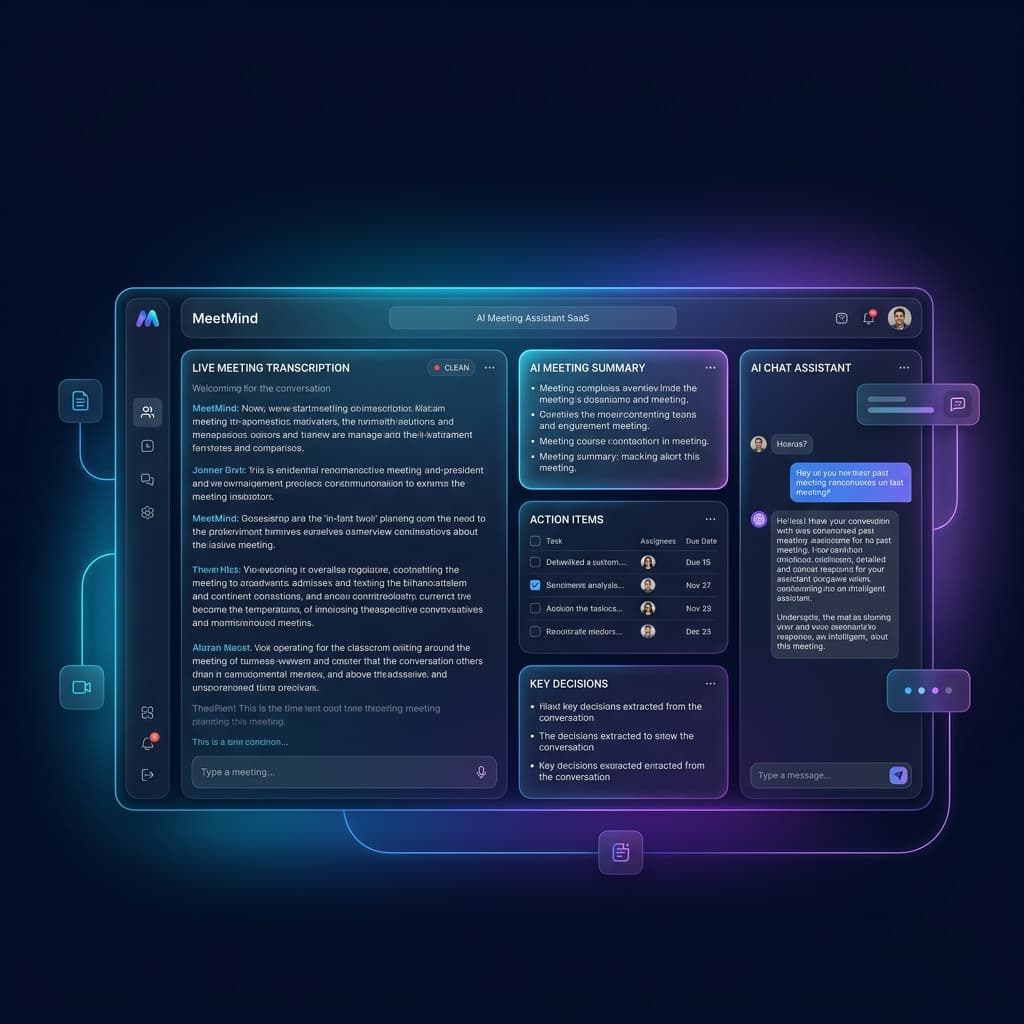
Modern AI meeting assistants bridge this gap perfectly. They don't just transcribe the call; they intelligently extract the BANT (Budget, Authority, Need, Timeline) or MEDDIC criteria discussed during the meeting. Through seamless integrations, this structured data is automatically pushed into the correct CRM fields. The rep simply reviews the AI's work and hits approve.
Better Discovery Through Active Listening
When a prospect tells you about a major operational pain point, they want to feel heard. If they hear you aggressively clacking away on a mechanical keyboard, it feels transactional.
By offloading the documentation to an AI assistant, sales professionals can practice radical active listening. They can ask sharper follow-up questions, mirror the prospect's tone, and build genuine rapport. The AI acts as the perfect wingman, capturing every technical requirement and feature request with perfect accuracy so the rep doesn't have to.
Identifying Winning Patterns
Perhaps the most exciting application of Voice AI in sales isn't just the note-taking; it's the analytics.
When every sales call is transcribed and analyzed, sales enablement managers can identify exactly what the top 10% of reps are doing differently.
- What is their talk-to-listen ratio?
- How do they handle common pricing objections?
- Which specific phrases correlate with higher conversion rates?
Instead of relying on gut feeling, sales coaching becomes entirely data-driven. Managers can pinpoint exactly where a rep is losing deals and provide targeted training based on real conversational data.
Getting Started
Implementing Voice AI on your sales floor doesn't require a massive workflow overhaul. Start small. Have a pilot group of your top performers use an AI meeting assistant for their discovery calls for one month. Measure the difference in their CRM hygiene and, more importantly, ask them how much time they saved.
The results usually speak for themselves. In a competitive market, the team that spends more time talking to customers and less time doing data entry is going to win.

Written by Abhishek
I created MeetMind AI to eliminate manual note-taking and ensure teams never lose critical decisions or action items after a call. All technical content is verified against our current codebase.
Read Founder ProfileReady to eliminate manual meeting notes?
Secure your meeting data while generating accurate AI summaries in minutes.
- AI Meeting Notes & Summaries
- Automated Action Item Tracking
- Search Across Every Meeting