Table of Contents
Executive Overview
Transcribing the words spoken in a meeting is only 50% of the puzzle. The remaining, arguably more difficult half is Diarization: the process of determining who spoke when. Without accurate speaker attribution, downstream tasks like action item extraction, sentiment analysis, and summary generation completely collapse.
While single-speaker podcasts are trivial, a 6-person board meeting in a reverberant conference room presents a cascade of acoustic nightmares. Cross-talk (overlapping speech), rapid conversational turn-taking, and shifting acoustic environments break traditional clustering algorithms. This guide explores the core technical hurdles of multi-speaker diarization and how modern end-to-end neural architectures resolve them.
1. The Clustering Pipeline: How Diarization Works
Historically, diarization is not a single model, but a fragile pipeline of sequential machine learning tasks.
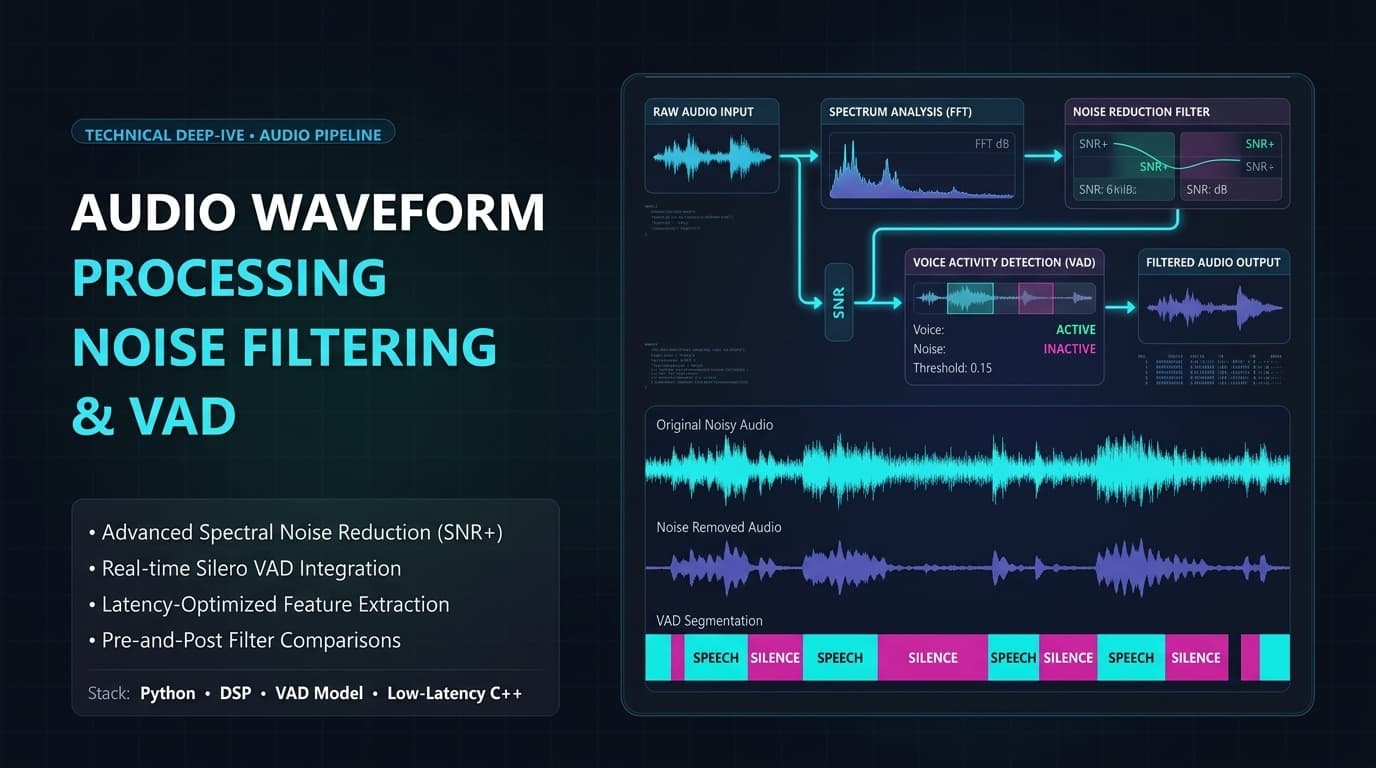
Step 1: Voice Activity Detection (VAD)
The system first strips away all silence to ensure it only analyzes active human speech.
Step 2: Speaker Embedding Generation (d-vectors)
The active audio is sliced into overlapping 1.5-second windows. These windows are passed through a deep neural network (often a ResNet architecture) trained on massive voice datasets. The network outputs a high-dimensional vector (an embedding or "voice print") representing the unique biometric acoustic characteristics of that snippet of audio.
Step 3: Clustering
An algorithm (typically Agglomerative Hierarchical Clustering or Spectral Clustering) groups these embeddings based on cosine similarity. If Group A has 400 embeddings tightly packed in vector space, the system labels it "Speaker 1." If Group B is distinct, it becomes "Speaker 2."
2. The Nemesis of Diarization: Cross-Talk (Overlapping Speech)
The traditional clustering pipeline relies on a fatal assumption: that only one person speaks at a time. In reality, human conversation features overlapping speech (cross-talk) roughly 10% to 15% of the time.
The Embedding Collision
When two people speak simultaneously, the audio snippet contains a mixture of both vocal cords. When passed through the embedding network, the resulting vector does not look like Speaker 1 or Speaker 2. It lands arbitrarily in the middle of the vector space.
Traditional clustering algorithms will either:
- Assign the overlapping segment entirely to Speaker 1 (missing Speaker 2).
- Assign it entirely to Speaker 2.
- Create a hallucinated "Speaker 3" out of the blended audio.
The Solution: Overlapped Speech Detection (OSD)
Modern pipelines combat this by introducing an OSD model before clustering. The OSD classifies frames not just as speech or silence, but as single-speaker or multi-speaker. When multi-speaker frames are detected, advanced systems utilize Source Separation algorithms to split the audio waveform into distinct tracks before generating embeddings.
3. Acoustic Room Reflections and Reverberation
A diarization model trained on studio-quality podcast microphones will fail spectacularly in a corporate conference room.
The "Far-Field" Problem
When multiple participants sit around a single omnidirectional microphone on a conference table, the microphone picks up the direct path of the voice, followed milliseconds later by acoustic reflections bouncing off the glass walls and hard desks.
This reverberation severely distorts the frequency spectrum of the voice. If Speaker A leans forward to speak, their embedding looks like Vector X. If Speaker A leans backward 3 feet into a more reverberant zone, their embedding shifts, potentially causing the clustering algorithm to categorize them as a new speaker entirely.
The Solution: Data Augmentation and End-to-End Models
To solve this, modern embedding networks are trained using heavy data augmentation—artificially injecting room impulse responses (RIRs) and background noise into the training data. This forces the neural network to learn the underlying biometric voice traits while ignoring the spatial acoustics of the room.
4. Speaker Re-Identification Across Long Meetings
In a 15-minute sync, speakers usually maintain a consistent tone. In a 3-hour strategy workshop, voices change.
Vocal Fatigue and Shifting Baselines
Over long durations, participants experience vocal fatigue—their pitch lowers, they speak quieter, or they might transition from an energetic presentation stance to a relaxed, seated posture. Furthermore, they may switch from a headset to a laptop microphone midway through the call.
These shifts cause their embeddings to drift across the vector space. A rigid clustering algorithm will assume the relaxed Speaker A at Hour 3 is a different person than the energetic Speaker A at Hour 1.
The Solution: Dynamic Clustering and Graph Networks
Advanced pipelines employ dynamic clustering constraints. They assume that if a voice shifts gradually over time, it is likely the same speaker. Modern solutions are also moving toward End-to-End Neural Diarization (EEND). EEND models (like those being researched by Deepgram and Google) abandon the rigid VAD -> Embedding -> Clustering pipeline entirely. Instead, they use Transformer architectures to ingest raw audio and directly output multi-speaker probabilities per frame, inherently handling drift and overlap through attention mechanisms.
5. How Modern AI Transcription Solves This
When architecting a meeting intelligence product, you must choose how to deploy your diarization stack.
The Pyannote Stack (Self-Hosted)
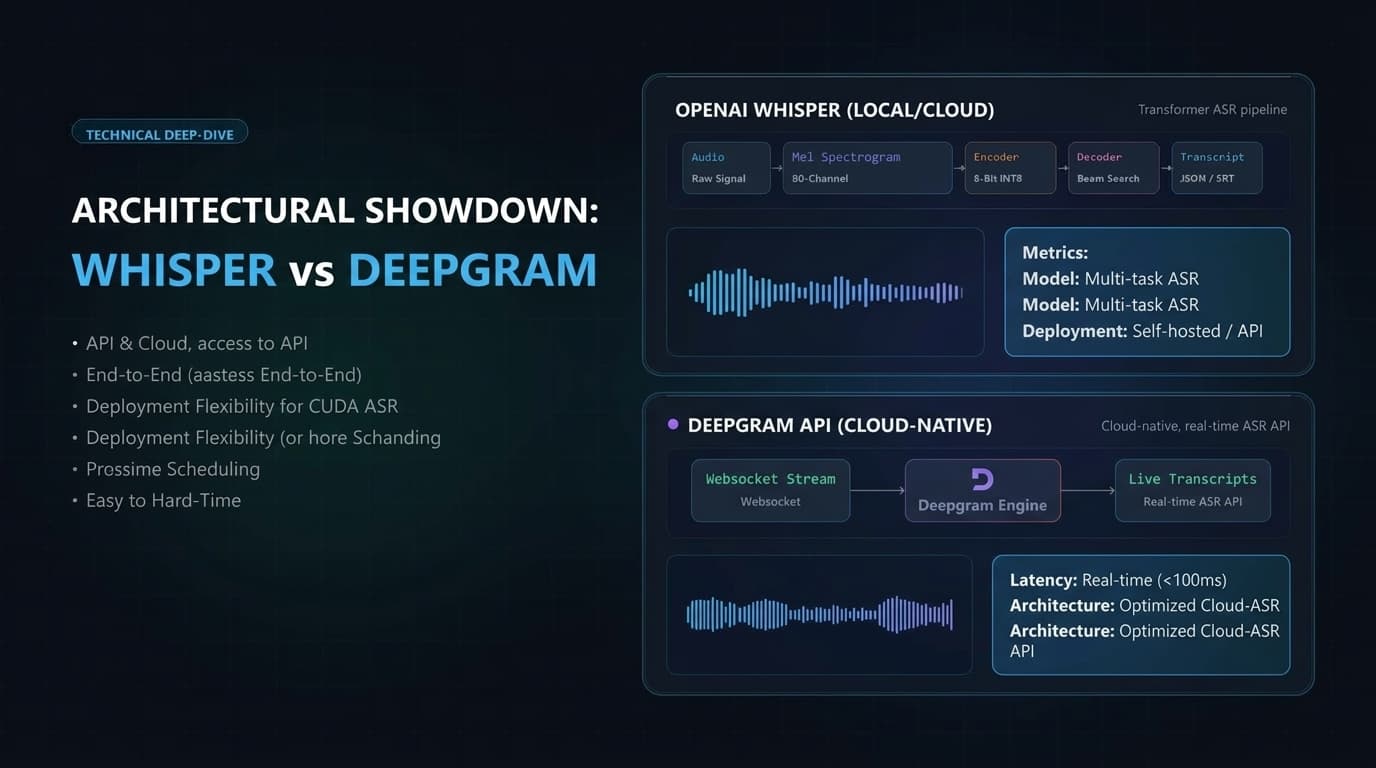
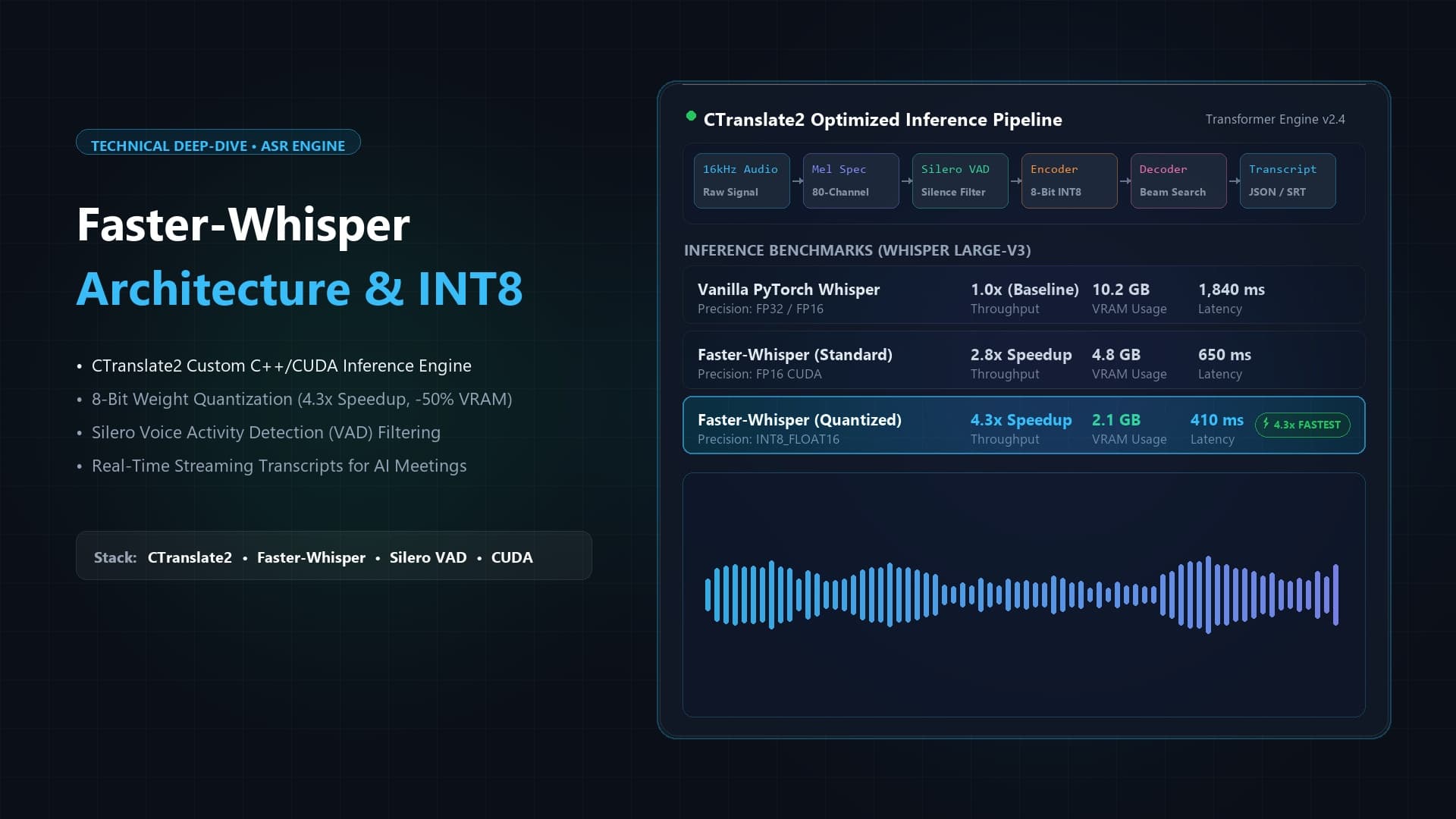
If you are running a self-hosted Whisper pipeline, the industry standard for open-weights diarization is Pyannote.audio. Pyannote 3.1 integrates advanced OSD and Spectral Clustering. However, stitching Pyannote timestamps with Whisper text timestamps is notoriously fragile and requires complex sliding-window alignment scripts.
Deepgram Nova-3 (Managed)
Commercial providers like Deepgram have largely solved the engineering pain of diarization by integrating it natively into the acoustic model. Nova-3 doesn't run a separate, disjointed pipeline; it utilizes joint decoding, where the engine predicts the phoneme and the speaker identity simultaneously. This results in incredibly precise word-level diarization, even during rapid conversational turn-taking, without the need to manage complex clustering thresholds on your backend.
Frequently Asked Questions
Why does the transcript sometimes assign my words to someone else?
This usually happens during brief interjections (e.g., you say "Right" while someone else is talking). If the interjection is too short (under 500ms), the embedding network struggles to generate a confident voice print, causing the clustering algorithm to default the text to the dominant speaker.
Can I pre-register user voices so the AI knows exactly who is speaking?
Yes, this is called Speaker Verification or "Voice Enrollment." By having a user record a 30-second voice sample during onboarding, you can store a baseline embedding in your database. During the meeting, instead of doing blind clustering, the system compares the audio stream against known database embeddings, drastically improving accuracy.
Does stereo audio make diarization easier?
Immensely. If you record audio locally on individual devices (e.g., via a decentralized web app where each participant has their own microphone channel), you bypass the need for algorithmic diarization entirely. You simply transcribe each channel independently and stitch the text together based on absolute timestamps.
How many maximum speakers can these models handle?
Most clustering algorithms begin to degrade significantly past 8 to 10 speakers in a single audio file, as the vector space becomes too crowded. If your application targets massive 30-person town halls, you must rely on multi-channel recording rather than algorithmic diarization.

Written by Abhishek
I created MeetMind AI to eliminate manual note-taking and ensure teams never lose critical decisions or action items after a call. All technical content is verified against our current codebase.
Read Founder ProfileReady to eliminate manual meeting notes?
Secure your meeting data while generating accurate AI summaries in minutes.
- AI Meeting Notes & Summaries
- Automated Action Item Tracking
- Search Across Every Meeting