Table of Contents
The landscape of remote work has shifted dramatically over the past few years. If 2020 was the year we all learned how to use Zoom, 2026 is the year we finally figured out how to make those calls actually productive.
One of the biggest drivers of this shift? AI meeting assistants.
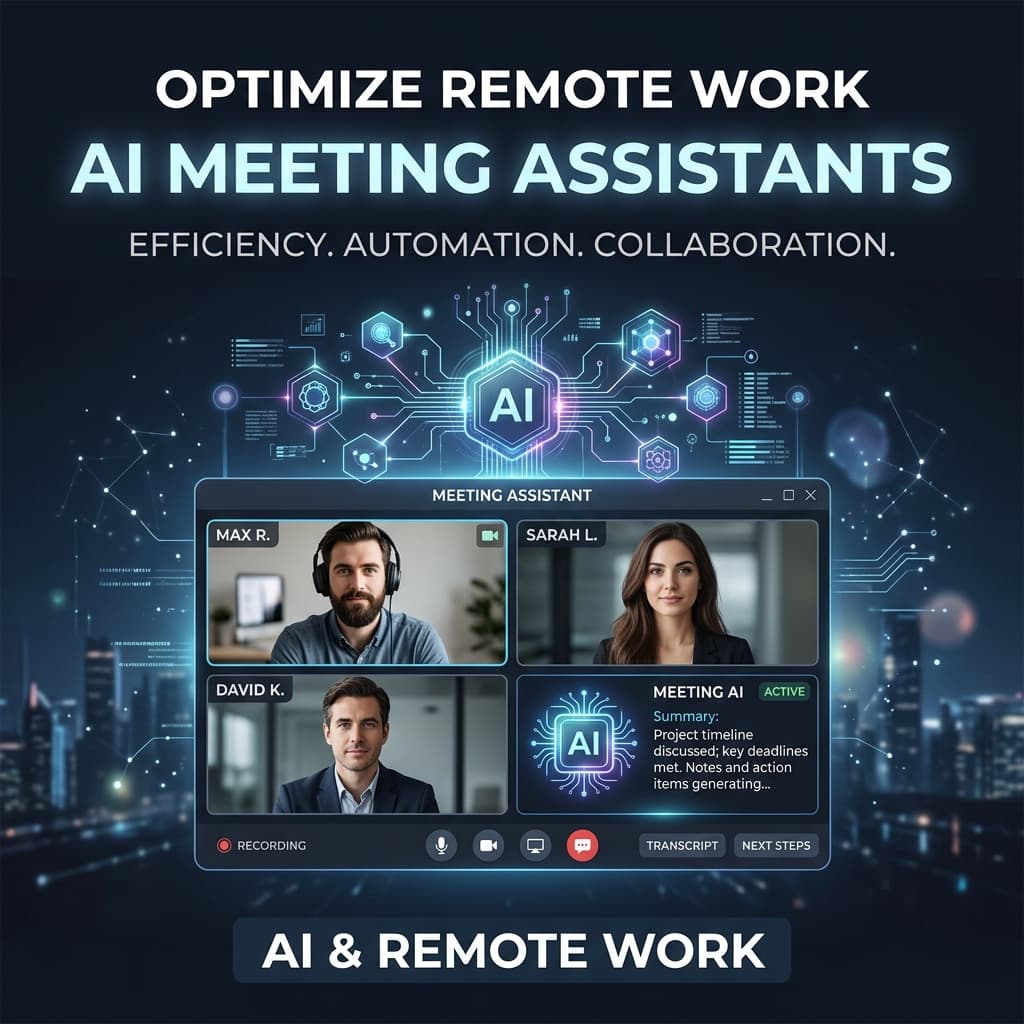
Instead of relying on designated note-takers or scrambling to write down action items while trying to maintain eye contact with a webcam, distributed teams are leaning heavily on automated tools to capture the essence of their conversations. Let's break down exactly how this technology is changing the daily grind for remote workers today.
Curing "Video Call Fatigue" Once and For All
We've all been there: sitting through a 45-minute sync that probably could have been an email, trying to pay attention while updating a Jira board on another monitor. The cognitive load of active listening, participating, and documenting simultaneously is exhausting.
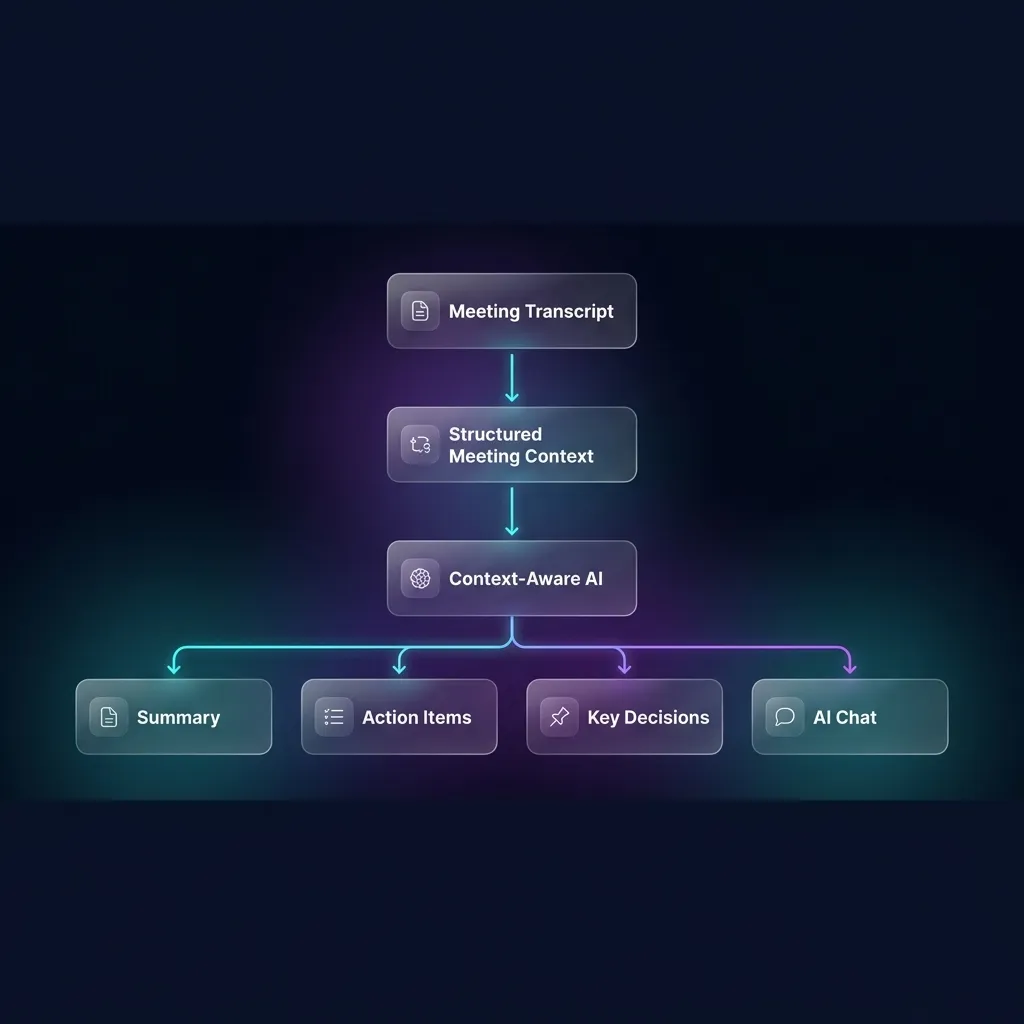
AI meeting assistants act as a reliable co-pilot. When you know an intelligent system is accurately transcribing the call, summarizing the key points, and extracting action items, you can actually participate in the meeting. You can look at the speaker, read the room, and think critically about the problem being solved instead of playing stenographer.
The Rise of Asynchronous Collaboration
Not everyone needs to be in every meeting. In fact, a core tenet of effective remote work in 2026 is defaulting to asynchronous communication whenever possible.
However, FOMO (Fear Of Missing Out) often drives employees to attend meetings they don't strictly need to be in, just to stay in the loop. AI summaries solve this beautifully. When a high-quality, structured summary is automatically generated and pushed to a Slack channel or Notion page immediately after a call, team members can confidently skip non-essential meetings. They can catch up on the decisions made in three minutes instead of thirty.
Breaking Down Language and Accent Barriers
Global teams are the standard now, but language barriers can still create friction. Modern AI meeting assistants, equipped with advanced natural language processing (NLP) and speech-to-text models, are incredibly adept at handling diverse accents and even offering real-time or post-meeting translations.
This levels the playing field. It ensures that brilliant ideas aren't lost in translation and that non-native speakers feel just as heard and understood as their colleagues.
What This Means for Your Team
If your remote team isn't utilizing an AI meeting assistant yet, you're leaving a massive amount of productivity on the table. It's not just about saving time on note-taking; it's about fundamentally changing how your team interacts, collaborates, and protects their deep-work time.
As we move forward, the companies that thrive in a distributed environment will be the ones that leverage AI to handle the administrative heavy lifting, freeing their human talent to focus on creativity, strategy, and connection.

Written by Abhishek
I created MeetMind AI to eliminate manual note-taking and ensure teams never lose critical decisions or action items after a call. All technical content is verified against our current codebase.
Read Founder ProfileReady to eliminate manual meeting notes?
Secure your meeting data while generating accurate AI summaries in minutes.
- AI Meeting Notes & Summaries
- Automated Action Item Tracking
- Search Across Every Meeting